The short answer
Both come from the tea plant, Camellia sinensis. Green tea is heated soon after plucking so the leaf stays green and tastes light and fresh; black tea is left to oxidise fully, which turns it dark and gives a stronger, maltier cup that takes milk. Black tea generally has more caffeine per cup than green tea, though the amount varies with the leaf and how it is brewed.
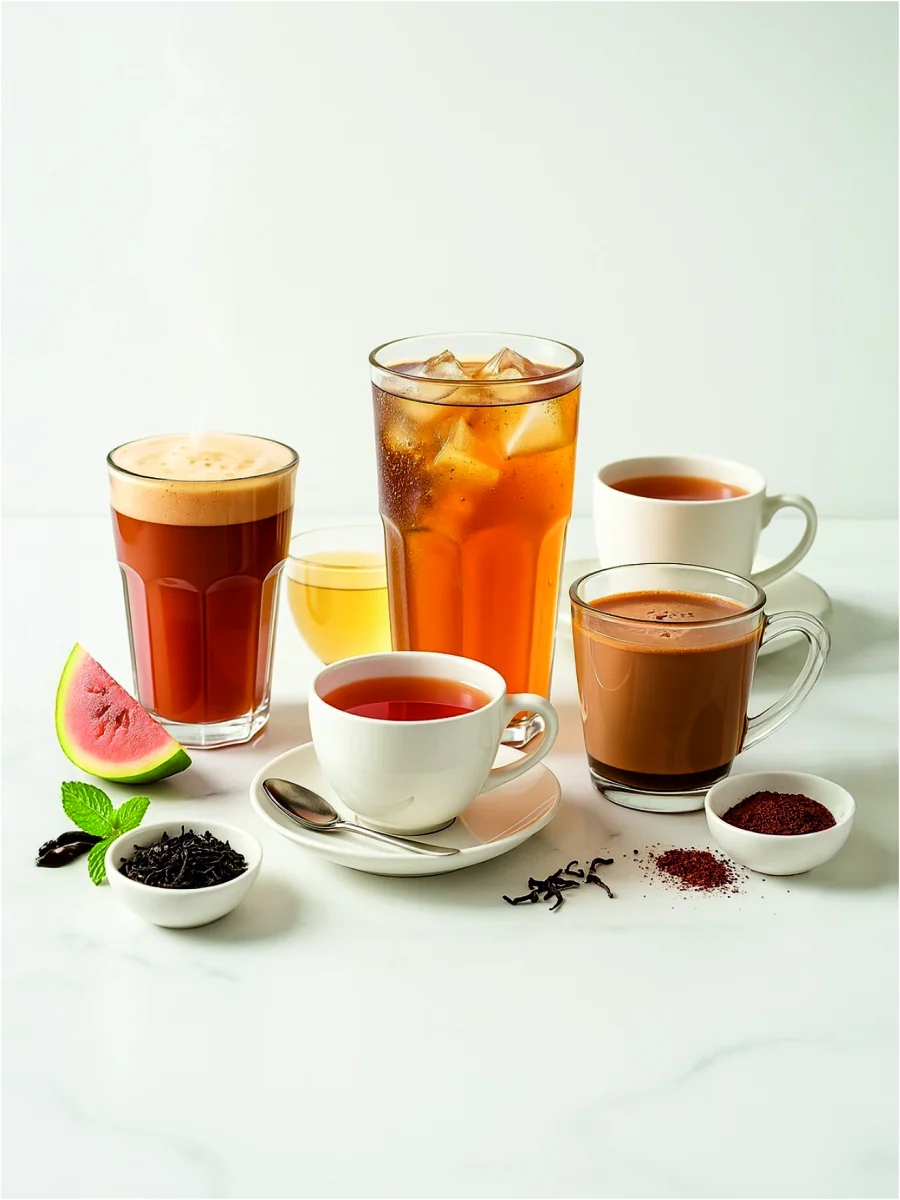
Side by side
| Green tea | Black tea | |
|---|---|---|
| Processing | Steamed or pan-fired soon after plucking, which stops oxidation | Withered, rolled or cut (orthodox or CTC), then fully oxidised and dried |
| Leaf and cup colour | Green leaf; pale yellow-green cup | Dark brown-black leaf; amber to deep red-brown cup |
| Taste | Light, fresh, grassy or vegetal; can turn bitter if over-brewed | Strong, malty, brisk; holds up to milk, sugar and spice |
| Caffeine | Generally less per cup | Generally more per cup |
| Water | 70–80°C, just off the boil | Boiling water; simmered with milk for chai |
| Milk | Usually none; lemon, honey, mint or spices instead | Usually yes in India |
| In India | Plain, with lemon or honey, or as spiced kahwa | Everyday chai, masala chai, Irani chai, cutting chai |
What actually makes the difference: oxidation
Once a tea leaf is plucked and its cells are broken, it reacts with air and darkens, much as a cut apple browns. Tea makers call this oxidation. For green tea, the leaf is heated quickly (steamed in the Japanese style, pan-fired in the Chinese style) to stop oxidation, keeping the green colour and fresh taste. For black tea, the leaf is withered, rolled or cut, and left to oxidise fully before drying, which builds the colour, body and malty flavour.
Black tea is made two ways. Orthodox tea keeps whole or broken leaves. CTC (crush, tear, curl) cuts the leaf into small granules that brew strong and fast, which is why it is the tea of Indian milk chai: see what is CTC tea. Oolong and white tea sit between and beside these two, with partial or very light oxidation.
Caffeine
Both contain caffeine. Black tea generally has more per cup than green tea, but the leaf, the amount used, the water temperature and the steeping time all change the figure, so a strong green tea can match a weak black one. Both usually have less caffeine than a cup of coffee. For the comparison in detail, read caffeine in tea vs coffee.
How to brew green tea
This is the method printed for our Regular Green Tea:
- Use about 2 g of green tea per cup.
- Heat the water to 70–80°C, just off the boil. Fully boiling water can turn green tea bitter.
- Steep for 2–3 minutes, then strain.
For iced green tea, brew it a little stronger and pour over ice. Lemon, honey or mint go well; milk usually does not.
How to brew black tea
Plain black tea: pour boiling water over the leaf, steep for 3–5 minutes and strain. Add lemon, or a splash of milk, to taste.
Indian milk chai: this is the method printed for our Kadak Chai:
- Add 3 g of tea to a vessel and pour over 50 ml of boiling water.
- Add sugar to taste, then 120 ml of milk, and stir.
- Simmer: bring to a boil and simmer for 3–5 minutes, then strain into a cup and serve hot.
For milk tea and bubble tea, see the best black tea for milk tea.
Which should you choose?
- For chai with milk and sugar: black tea, ideally CTC.
- For a light cup without milk, through the day: green tea.
- For less caffeine: green tea generally has less, brewed short and at a lower temperature.
- For iced tea: either; black gives a brisk, classic iced tea, green a lighter, fresher one.
Many tea drinkers keep both: black for the morning chai, green for later in the day.
Green and black tea from our range
Green tea: our green tea range is orthodox leaf, from Regular and Darjeeling to Masala, Peppermint, Tulsi and Desi Kahwa. Black tea: our flavoured CTC teas are Assam CTC blends for milk chai, such as Kadak Chai, Masala and Hyderabadi Special Irani Chai. Our instant teas include instant black teas (Earl Grey, Lemon, Honey Ginger) and instant green teas (Jasmine, Rose, Kashmiri Kahwa and more) that dissolve in water. All are made at our FSSC 22000 certified plant in Hyderabad.
Shop the ingredients
The products this guide talks about, with their prices. Each card opens the product page.
Free delivery in India on orders from ₹499 · ₹99 below
Do green tea and black tea come from the same plant?
Yes. Both come from Camellia sinensis. The difference is processing: green tea is heated soon after plucking to stop oxidation, black tea is fully oxidised before drying.
Which has more caffeine, green tea or black tea?
Black tea generally has more caffeine per cup than green tea, but the leaf, the amount used and the brewing time all change it. Both usually have less caffeine than coffee.
What temperature should green tea be brewed at?
About 70–80°C, just off the boil, for 2–3 minutes with about 2 g of tea per cup. Fully boiling water can make green tea taste bitter.
Can you add milk to green tea?
You can, but it is not usual. Green tea is light and milk tends to cover its taste; lemon, honey, mint or spices are the common additions. Black tea is the tea for milk chai.
Which tea is used for Indian chai?
Black tea, usually Assam CTC, because its small granules brew strong and fast and hold up to milk, sugar and spice.
Is Darjeeling tea green or black?
Darjeeling is a region, not a type, and its gardens make both. Darjeeling is best known for its black tea; our Darjeeling Green Tea is a green tea from the same hills.