The short answer
Indian chai is black tea, usually Assam CTC, boiled with milk and sugar, often with spices such as ginger and cardamom. Tea grew wild in Assam long before it was a commercial crop; plantations from the 19th century made India one of the world’s great tea producers, and in the 20th century tea stalls and the chaiwala turned it into the country’s everyday drink. Every region now has its own way of making it.
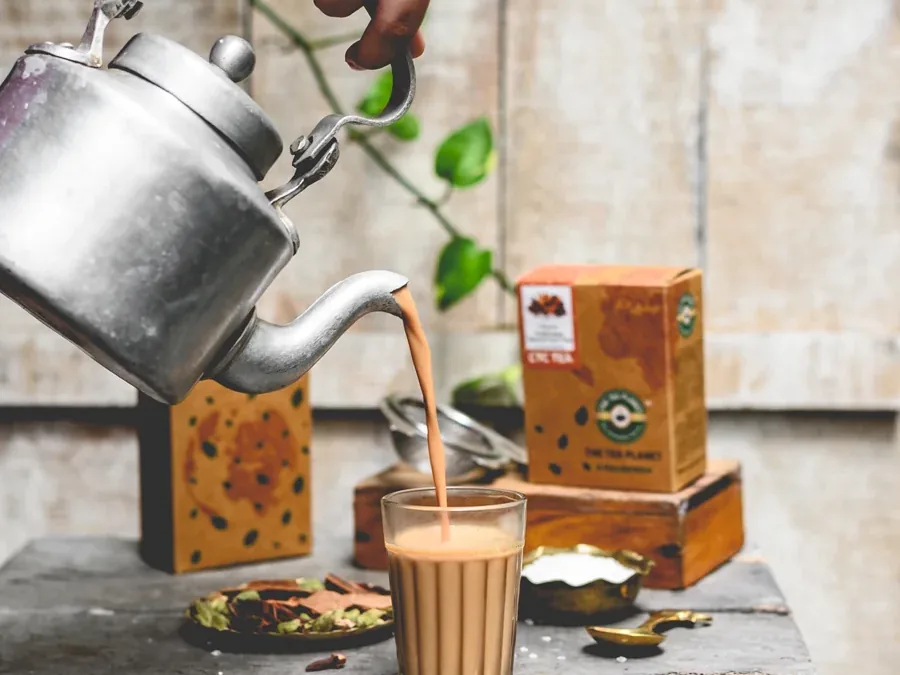
How India became a chai country
- Wild tea in Assam. A native variety of the tea plant grew in the hills of Assam, and local communities such as the Singpho are recorded as brewing it long before it was traded.
- The plantations. From the 1830s, the British began growing tea commercially in Assam, and later in Darjeeling and the Nilgiris, largely for export to Britain.
- Drinking it at home. In the first half of the 20th century, the tea industry ran campaigns to get Indians drinking the tea grown here, with tea stalls at railway stations, factories and markets.
- Milk, sugar and spice. Tea sellers made it their own: boiled hard with milk and plenty of sugar, and often spiced, which made a little tea go a long way and suited Indian taste.
- CTC tea. The crush-tear-curl process, which cuts the leaf into small granules that brew strong and fast, became the standard tea for milk chai. Read more in what is CTC tea.
Regional styles of chai
| Style | Where, and what makes it different |
|---|---|
| Masala chai | All over India. Tea, milk and sugar simmered with a spice mix: ginger, cardamom, cinnamon, clove, black pepper. Every home has its own blend. |
| Adrak and elaichi chai | Everywhere. The two most common single-spice chais: fresh ginger (adrak) or green cardamom (elaichi). |
| Kadak chai | Everywhere. “Kadak” means strong: more tea, boiled longer, for a bold, dark cup. |
| Cutting chai | Mumbai. Strong, sweet chai served as a half glass (“cut”), quick and cheap, from street stalls. |
| Irani chai | Hyderabad, from the Irani cafés. Strong tea brewed on its own and mixed in the cup with milk simmered until thick, served sweet with Osmania biscuits or bun maska. |
| Kulhad chai | North India. Chai served in an unglazed clay cup, which adds a faint earthy aroma. |
| Gur (jaggery) chai | Villages and homes across India. Sweetened with jaggery instead of sugar, for a deeper, caramel sweetness. |
| Zafrani chai | Hyderabad and the north. Chai scented with saffron (zafran). |
| Kahwa | Kashmir. Green tea brewed with saffron, cardamom, cinnamon and almonds, served without milk. |
| Noon chai | Kashmir. A pink, salted milk tea made from green tea leaves boiled with a pinch of baking soda. |
| Sulaimani | Kerala’s Malabar coast. Light black tea with lemon and spices, without milk, often served after a meal. |
| Butter tea | Ladakh and the Himalaya. Tea churned with butter and salt. |
For how three of these compare in the cup, read karak vs Irani chai vs masala chai; for Hyderabad’s own cup, our Irani chai guide.
How to make a good cup of chai
This is the method printed for our CTC chai blends, such as Masala and Kadak Chai:
- Add 3 g of tea to a vessel and pour over 50 ml of boiling water.
- Add sugar to taste, then 120 ml of milk, and stir.
- Simmer: bring to a boil and simmer for 3–5 minutes, then strain into a cup and serve hot.
Use more tea for a stronger, kadak cup, and more milk for a creamier one. For masala chai from plain tea, crush the ginger or cardamom and add it with the tea so it boils with the leaves.
Chai today: from the stall to the vending machine
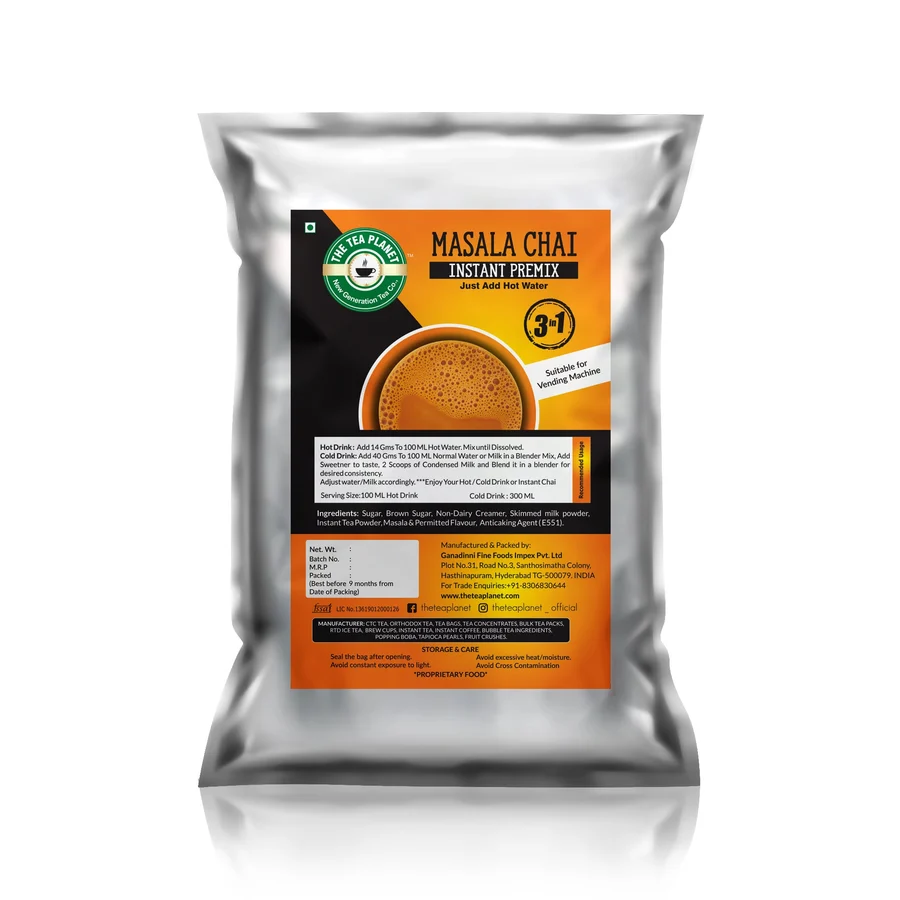
The cup is the same; the ways of serving it have multiplied. Offices and canteens pour chai from vending machines using instant premixes that carry the tea, milk and sugar in one powder: see instant tea premix for vending machines. Cafés serve it as a chai latte, hot or iced. And for the difference between the tea in your chai and the tea in a lighter cup, read green tea vs black tea.
Chai from our range
We blend Assam CTC teas for milk chai, the flavoured tea range: Masala, Kadak Chai, Hyderabadi Special Irani Chai, Kullad, Jaggery, Zaffrani Chai, Ginger Bits and more. For machines and instant cups, see our chai premixes for vending machines; for kahwa, our Desi Kahwa Green Tea. All are made at our FSSC 22000 certified plant in Hyderabad. Bulk savings apply automatically at checkout: 10% off orders from ₹4,999 and 20% off orders from ₹19,999.
Shop the ingredients
The products this guide talks about, with their prices. Each card opens the product page.
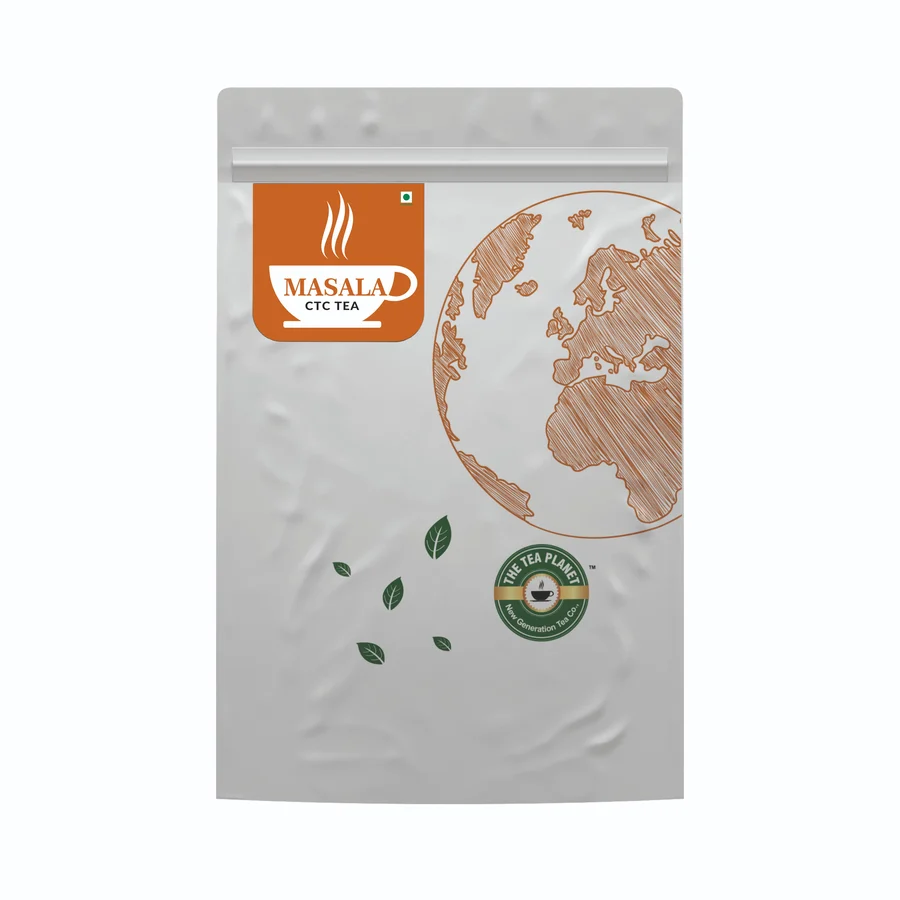
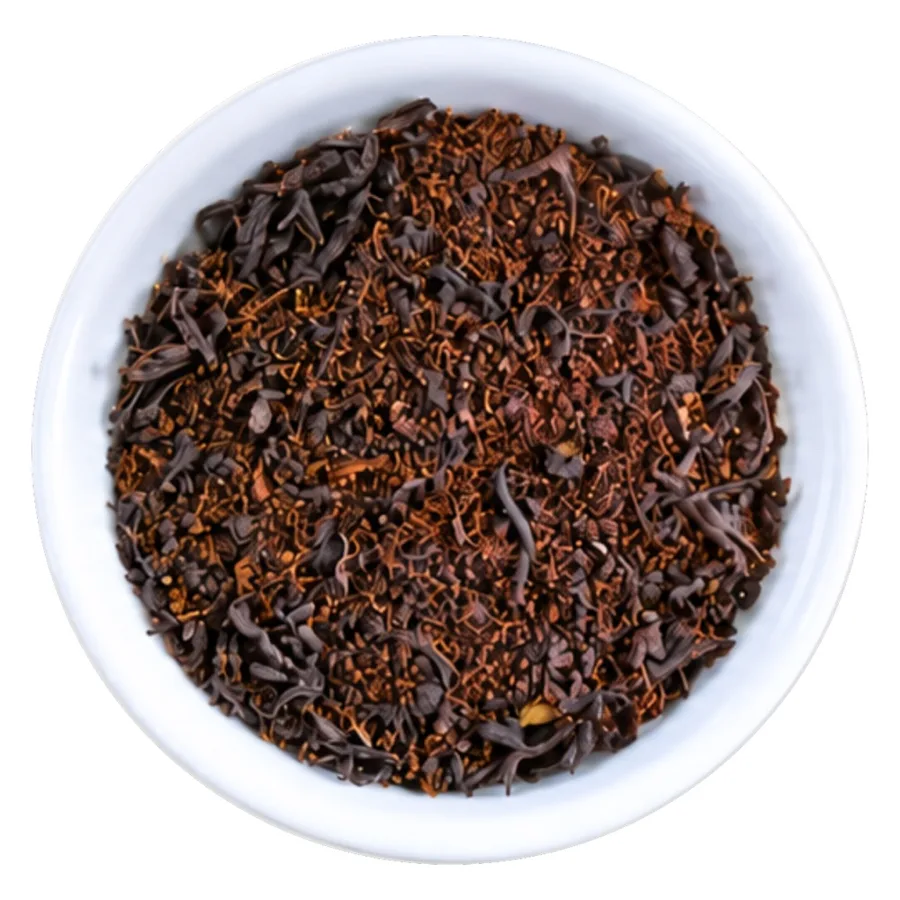
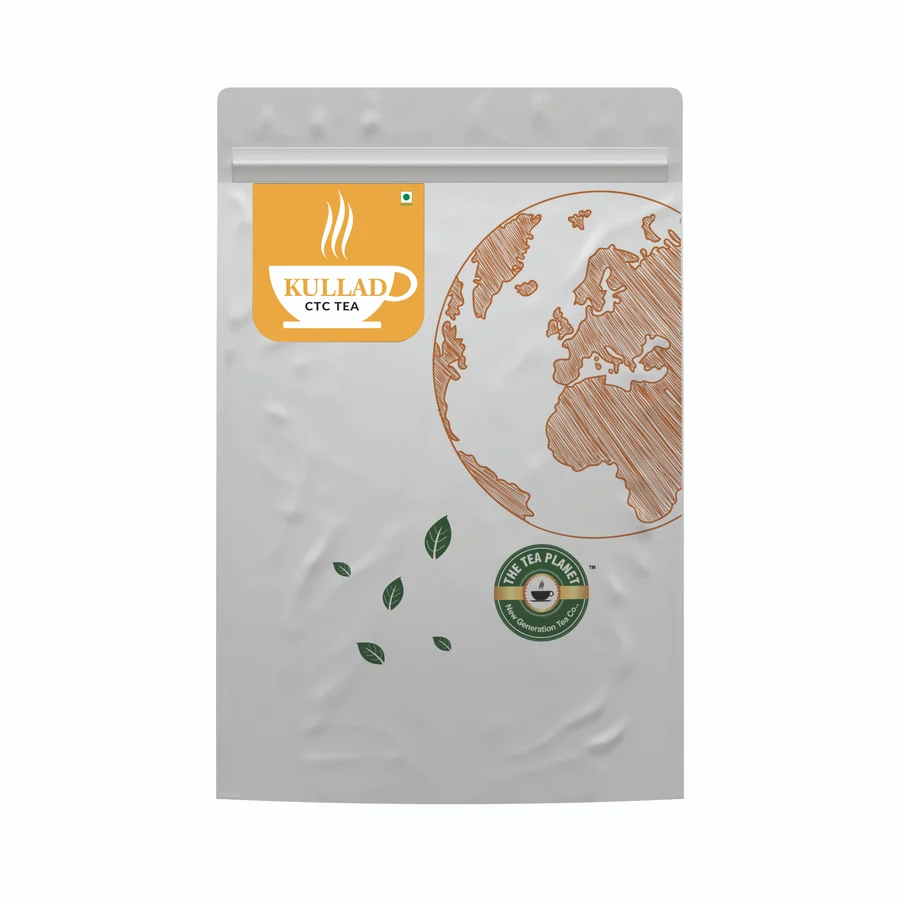
Free delivery in India on orders from ₹499 · ₹99 below
What is chai in India?
In India, chai simply means tea, and usually black tea boiled with milk and sugar, often with spices such as ginger or cardamom. Masala chai is the spiced version.
Where did chai come from?
Tea grew wild in Assam, and commercial plantations began there in the 1830s, mostly for export. In the 20th century tea stalls and chaiwalas made milk-and-sugar chai India's everyday drink.
What is the difference between chai and masala chai?
Chai is tea with milk and sugar. Masala chai adds a spice mix, commonly ginger, cardamom, cinnamon, clove and black pepper, simmered with the tea.
What is cutting chai?
Mumbai's street-stall chai: strong and sweet, served as a half glass, or a "cut" glass, so it is quick and cheap.
Which tea is best for Indian chai?
Strong black tea, usually Assam CTC. Its small granules brew strong and fast and hold up to milk, sugar and spice.
How do you make chai at home?
Add 3 g of tea to 50 ml of boiling water, add sugar to taste and 120 ml of milk, bring to a boil and simmer for 3–5 minutes, then strain and serve hot.